
Implant Overdentures
If your denture slips when you talk, laugh or eat, a few dental implants can hold it firmly in place. At our Kilimani clinic in Nairobi, we fit implant overdentures, sometimes called snap-on dentures, that clip onto the implants and come out for cleaning.
Your quote follows your assessment · payment plans available
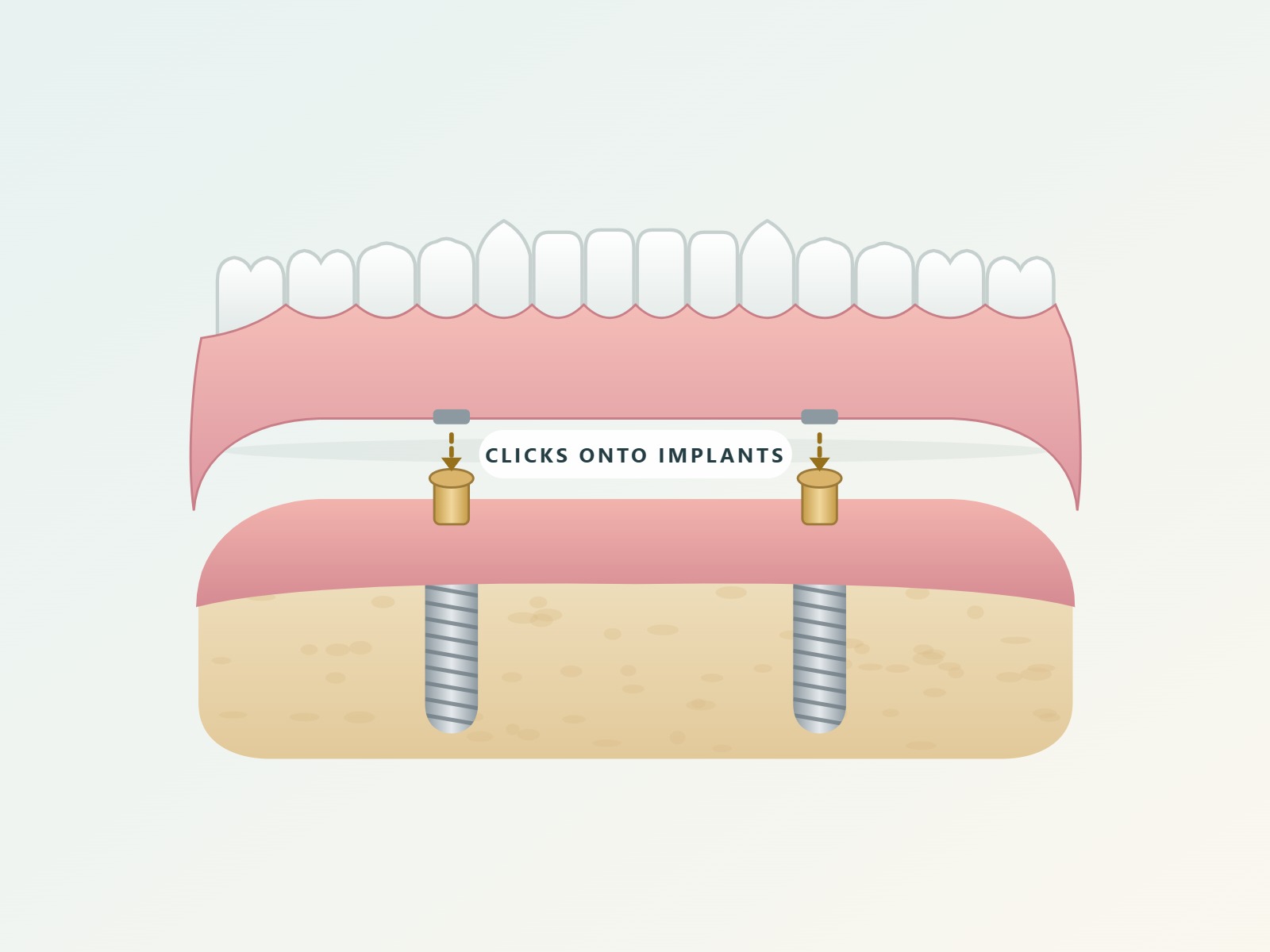
What is an implant overdenture?
An implant overdenture, also called an implant-retained or implant-supported denture, is a removable denture that clips onto dental implants. Small attachments on the implants click into matching parts inside the denture, so it stays in place when you talk, laugh and eat, and you can still take it out to clean it.
- More stable than a conventional denture, which rests on the gums and can move.
- Usually fewer implants than fixed full-arch teeth.
- Easy to clean: you take it out every day, like a conventional denture.
Who an overdenture can suit
Attachments: depending on your case, the denture clips onto individual attachments on each implant or onto a bar that joins the implants. We recommend the type that suits your jaw, your bone and how easily you can clean it.
Planning your overdenture
- We examine your mouth and your current denture, and take a 3D scan to measure your bone.
- We decide with you how many implants you need and where; the lower jaw often needs fewer implants than the upper jaw.
- We check whether your current denture can be adapted, or whether a new denture will fit better.
- Your implants are planned digitally, with guided implant surgery where appropriate.
How your overdenture is made and fitted
- Consultation and 3D scanWe examine your mouth and denture and plan your implants.
- Implant placementThe implants are placed, usually under local anaesthetic.
- HealingThe implants bond with the bone over a few months. Where possible, we adjust your denture so you can keep wearing it.
- AttachmentsThe attachments are fitted on the implants and matching parts are set into the denture.
- FittingYour overdenture clicks into place; we check your bite and show you how to take it in and out.
- ReviewsRegular check-ups keep your implants, gums and denture in good condition.
Caring for your overdenture
- Take the denture out every day to clean it, and brush gently around the implants and attachments.
- We will advise whether to take it out at night.
- The small parts inside the denture that grip the attachments wear over time and need replacing from time to time, usually at a short visit.
- Come for regular check-ups, so we can check the implants, your gums and the fit of the denture.
Risks and what to expect
- An overdenture is still removable, so it can move slightly more than fixed teeth.
- The attachments and the parts inside the denture wear and need maintenance; the denture may also need relining as your gums change.
- Food can collect under the denture if it is not cleaned every day.
- The usual risks of implant surgery apply, including infection and an implant that does not bond with the bone.
Other options to consider
- A conventional denture without implants. See dentures.
- Fixed full-arch teeth that stay in your mouth. See full-arch implants (All-on-X).
- Implant crowns or bridges if you still have some healthy teeth. See implant crowns, bridges & dentures.
Implant overdentures: your questions
What is the difference between an overdenture and All-on-X?
An overdenture clips onto implants and you take it out to clean it. All-on-X teeth are fixed to the implants and only your dentist can remove them. An overdenture usually needs fewer implants.
Is an implant overdenture the same as a snap-on denture?
Yes. “Snap-on denture” is another name for an implant overdenture, because it snaps onto attachments on the implants.
How many implants will I need?
It depends on your jaw and your bone. The lower jaw often needs fewer implants than the upper jaw; we confirm the number after your 3D scan.
Can my current denture be used?
Sometimes it can be adapted to clip onto the implants; often a new denture fits better. We check this at your assessment.
Do I take it out at night?
You take it out every day to clean it. We will advise whether to wear it at night.
Will it feel firm when I eat?
It is usually more stable than a conventional denture because it clips onto implants, but it can still move slightly more than fixed teeth.
How much does an implant overdenture cost?
The cost depends on the number of implants, the attachments and the denture. You receive your quote after your assessment, and you can spread the cost with a payment plan. See also medical insurance at IAMC.
Related guides: Payment plans for implants · Medical insurance at IAMC · Travelling for implants
Explore the right treatment for your smile.
Our team can explain your options, expected stages, aftercare and appropriate alternatives before you make a decision.