
Early Orthodontic Assessment
A growing smile deserves thoughtful guidance. At IAMC, our paediatric dentist evaluates how your child's teeth and jaws are developing, looks for early bite or eruption concerns and helps you understand whether monitoring or further orthodontic care may be useful.
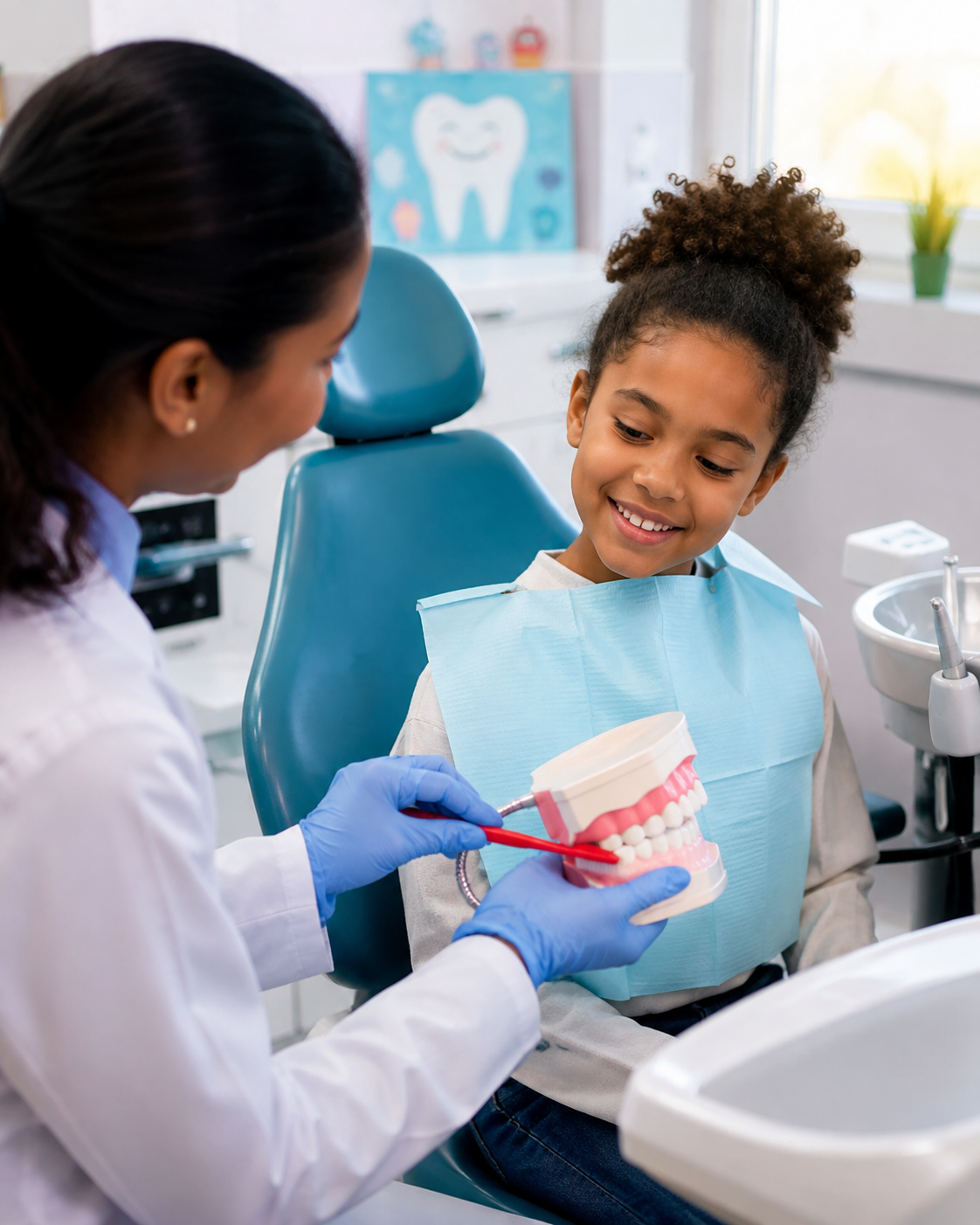
Understanding early orthodontic assessment
An early orthodontic assessment checks how your child's jaws, baby teeth and incoming permanent teeth are developing. It helps identify changes in tooth position, spacing, jaw relationships and the bite at a stage when growth is still underway.
The purpose of the appointment is to understand your child's dental development—not to begin braces automatically. Many children simply need periodic monitoring. In selected cases, an early referral or intervention can address a developing problem at an appropriate time.
When should your child have an orthodontic assessment?
The American Association of Orthodontists recommends an initial orthodontic check-up when a concern is first noticed and no later than about age seven. At this age, children often have both baby and permanent teeth, providing useful information about the changing bite. A younger child may need assessment sooner if a particular problem is suspected.
By around age seven
An early review can identify issues that may be easier to monitor or plan for while the jaws and teeth are developing.
Earlier if concerns arise
Do not wait for a particular birthday if there is an evident crossbite, difficulty biting, unusual eruption pattern, injury or another concern.
Signs your child may benefit from a review
Parents may notice changes as teeth erupt. Some are part of normal development, while others are worth examining to decide whether support is needed.
What does the dentist check?
Our paediatric dentist considers the child's dental history, comfort and stage of development. A clinical examination assesses the teeth, gums, jaw relationships and how the bite works, then identifies any concerns that would benefit from monitoring or a specialist orthodontic opinion.
- Tooth eruption: whether permanent teeth are appearing in expected positions and if baby teeth are being lost appropriately.
- Space and alignment: crowding, gaps, overlapping or displacement of teeth and the space available for future eruption.
- Front-to-back bite: prominence of the upper front teeth, reverse bite or other jaw-tooth relationships.
- Side-to-side bite: posterior crossbites, asymmetric contacts or functional shifts when the child closes the mouth.
- Vertical bite: open bites, deep bites and contact between upper and lower teeth.
- Oral habits and function: thumb sucking, tongue position, chewing and any concerns about speech or breathing that may need another professional's assessment.
- Oral health: cavities, gum health and brushing habits that may need attention before orthodontic appliances are considered.
Possible outcomes: monitor, guide or treat
An assessment should help parents understand the range of possibilities—not create pressure to start treatment. Recommendations are based on the individual child's findings, dental maturity and likely benefit.
Early treatment is not always better than treatment later. Some issues are most appropriately corrected when more permanent teeth have erupted; others may warrant earlier action because of function, trauma risk or development.

Your child's orthodontic assessment: step by step
We keep the experience reassuring and focused on clear information for children and caregivers.
- Listen to your concernsWe ask what you have noticed, review dental history and discuss any issues with chewing, tooth position or oral habits.
- Gentle clinical examinationThe dentist checks the teeth, gums, bite and jaw relationships, explaining each stage to the child.
- Review developmentWe consider the mix of baby and permanent teeth, eruption timing and potential space concerns.
- Take records if neededPhotographs, digital impressions and radiographs are selected when clinically useful, rather than performed routinely for every patient.
- Explain the findingsWe discuss what is within a normal developmental range and what might need watching, specialist input or treatment.
- Agree on a practical planParents receive advice about follow-up intervals, oral habits, hygiene and any referral or next-stage care.
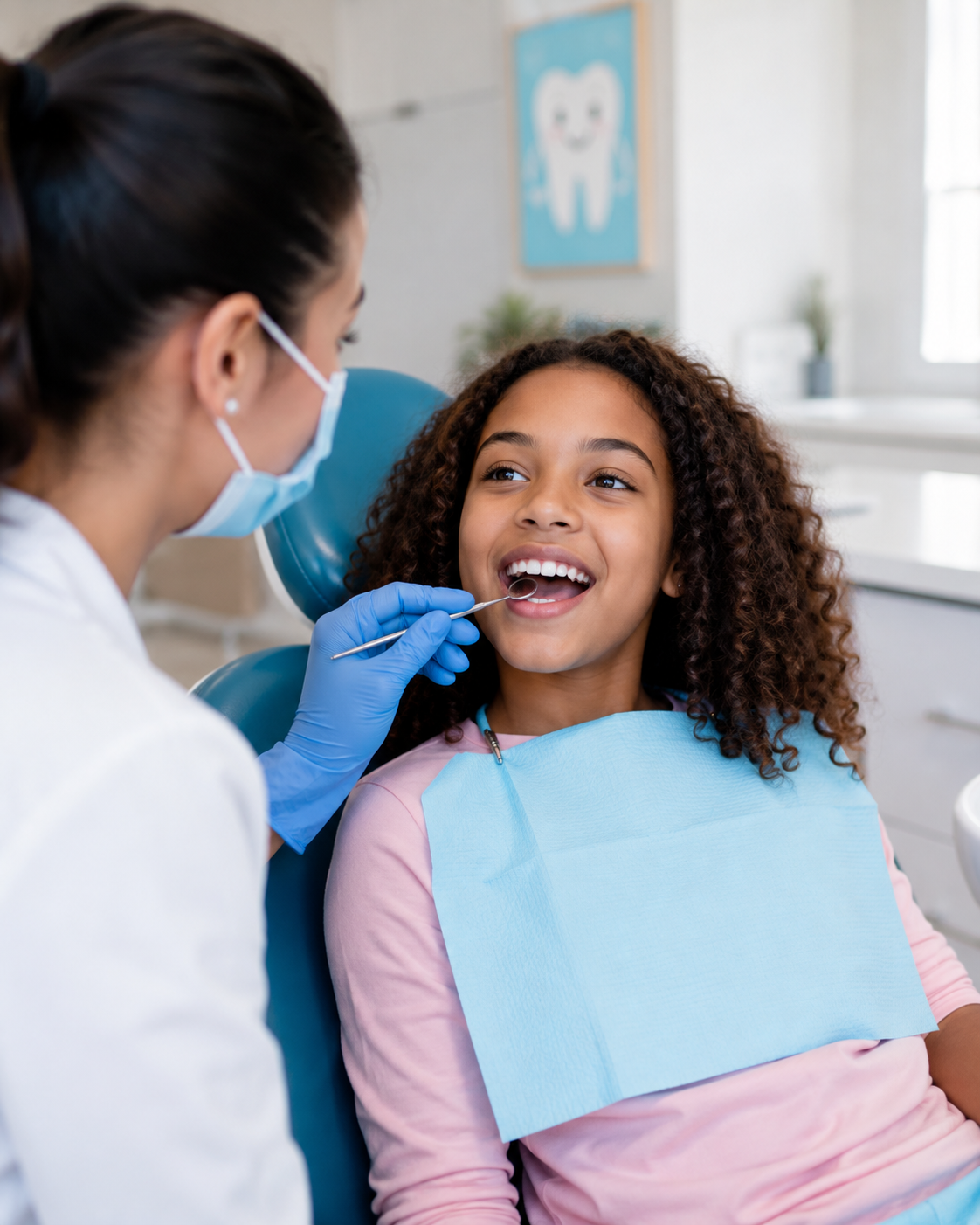
Why early orthodontic screening can be helpful
A timely review can clarify a child's developing bite and give families a better understanding of when—if ever—active treatment might be needed.
Earlier identification of concerns
Recognise developing crowding, bite discrepancies or eruption problems before they become more noticeable.
More informed timing
Make a plan for monitoring or intervention based on growth and clinical findings.
Support for daily function
Consider whether bite relationships, speech or chewing need closer evaluation.
Confidence for families
Understand what changes are expected and which signs deserve an earlier follow-up.
How parents can support healthy dental development
- Continue regular dental check-ups and bring up any changes you notice in tooth eruption, jaw position or biting.
- Help with twice-daily brushing using age-appropriate fluoride toothpaste and provide support while fine motor skills develop.
- Discuss thumb sucking, finger sucking or other persistent habits without blame or embarrassment; we can advise on supportive approaches.
- Seek assessment after an injury to a tooth or jaw, or if permanent teeth erupt in an unusual direction.
- If a child snores heavily or has possible sleep-related breathing problems, discuss this with an appropriate medical professional as well as the dental team.
- Attend the personalised review schedule suggested by your clinician, even when active orthodontic treatment is not needed.
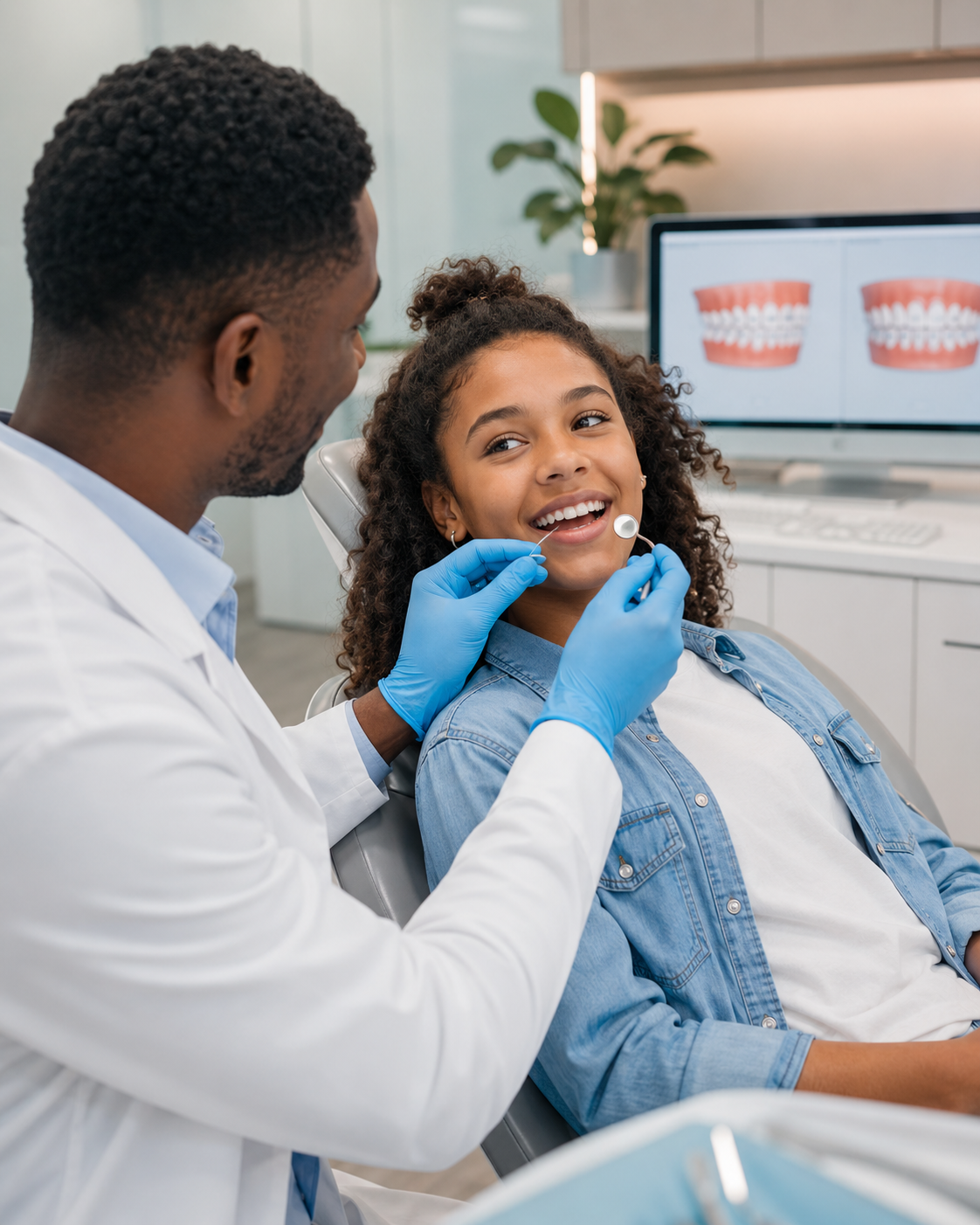

Why choose IAMC for your child's orthodontic assessment?
Our aim is to give parents clear, clinically considered guidance about growing teeth and jaw development—while making each appointment a positive experience for children. We combine paediatric dental care with careful planning and appropriate orthodontic referrals when needed.
Dedicated Paediatric Dentist
Our paediatric dentist understands the changing needs of children's teeth, oral habits and developing jaws and can identify when further orthodontic evaluation is useful.
Careful Growth and Bite Assessment
We examine tooth eruption, crowding, spacing and bite relationships as part of a considered, child-specific assessment.
The Right Care at the Right Time
We help families understand when observation is appropriate and when timely interceptive care or specialist orthodontic planning may be beneficial.
Digital Records When Indicated
Photographs, digital impressions or scans and appropriate X-rays may support clearer diagnosis and treatment discussions when clinically justified.
Child-Friendly Appointments
A calm, reassuring approach helps children feel heard and comfortable while we explain each stage in easy-to-understand language.
Clear Guidance for Parents
We explain findings, habits to watch, future review milestones and any referral or treatment options—without assuming every child needs braces.
Frequently asked questions
At what age should my child first have an orthodontic assessment?
A check by around age seven is widely recommended, or sooner if a dentist or parent notices a problem. The right timing depends on development and the specific concern.
Does an early orthodontic assessment mean my child needs braces?
No. Many children need only observation while permanent teeth erupt. The purpose is to identify whether monitoring, a referral or active treatment is appropriate.
What if my child's adult teeth are coming in behind the baby teeth?
Some unusual-looking eruption patterns settle as teeth change, while others deserve assessment. Your dentist can examine the position and advise whether to monitor or intervene.
Are gaps between baby teeth normal?
Some spacing is common and can be helpful as larger permanent teeth develop. The dentist considers the complete bite and eruption pattern rather than one gap alone.
Will my child need X-rays or digital scans?
Not necessarily. These records are taken when clinically justified to clarify tooth position, development or a specific treatment question.
Can early care prevent the need for braces later?
Not reliably. Selected concerns may benefit from early intervention, but many children still require later orthodontic treatment as their permanent teeth develop.
What is an interceptive orthodontic treatment?
It is treatment provided during dental development to address a selected issue such as a crossbite, space concern, harmful habit or an eruption problem. It is not needed for every child.
What happens if my child is nervous about the visit?
Our paediatric dentist uses simple explanations and a child-friendly approach. Tell the team about prior experiences or specific concerns so the visit can be planned with your child in mind.
Can a child be assessed even if all the permanent teeth have not appeared?
Yes. The mixed-dentition stage, when baby and permanent teeth coexist, often provides useful information about how the bite and jaws are developing.
How often will my child need follow-up?
The interval is personalised to the findings. Some children simply continue routine dental reviews, while others need more specific monitoring or specialist care.
Understand your child's growing smile.
Book an early orthodontic assessment at IAMC to discuss tooth eruption, bite development, concerns you have noticed and the most appropriate next steps.