
Paediatric Fluoride Treatment
Help protect your child's growing smile with professional fluoride care at IAMC. Our paediatric dentist assesses each child's needs and recommends gentle, targeted enamel protection alongside everyday brushing and healthy oral-care habits.
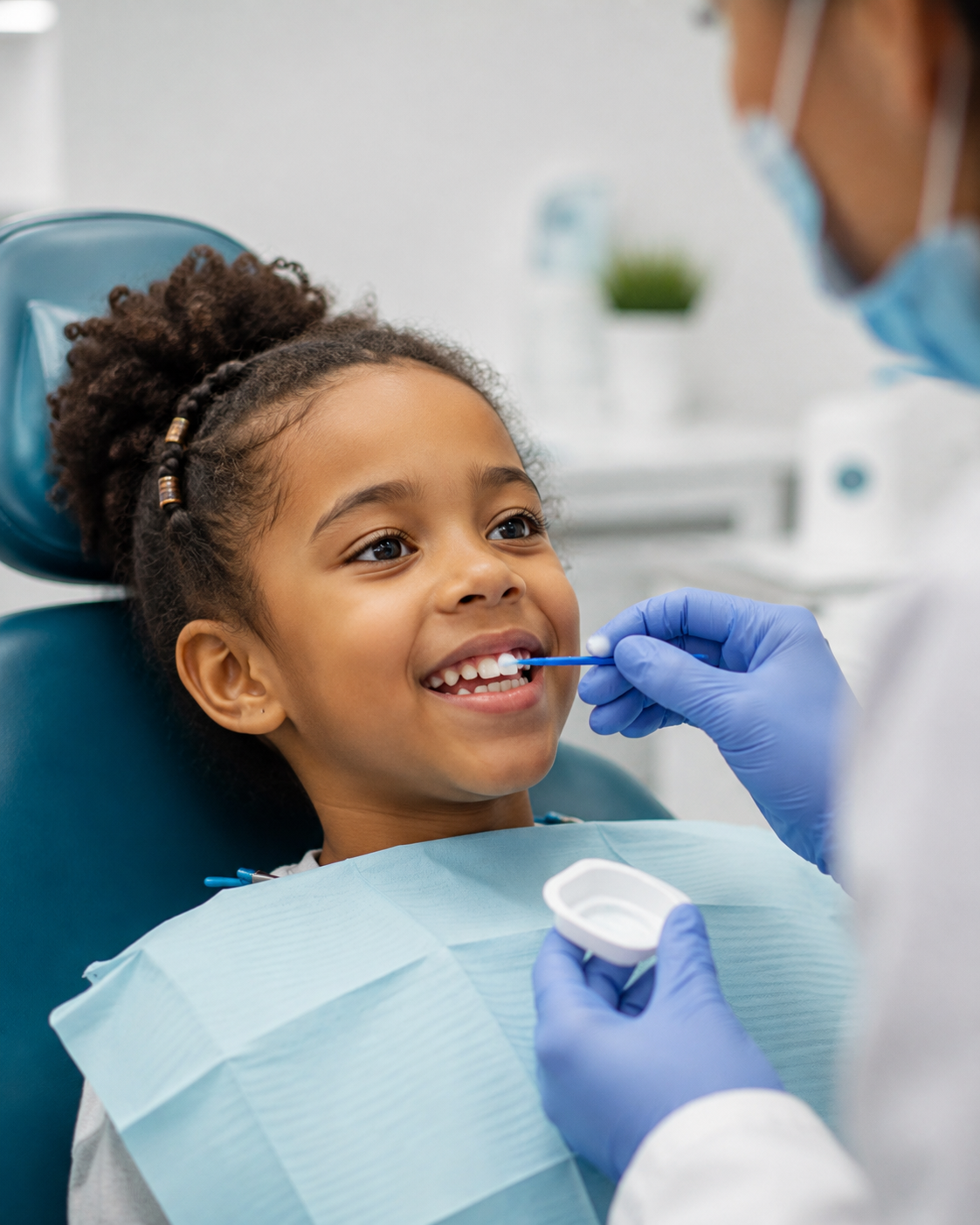
Gentle fluoride protection for growing teeth
Fluoride is a naturally occurring mineral that helps strengthen tooth enamel and makes teeth more resistant to acid attacks that can cause tooth decay. For children whose teeth need additional protection, a dentist may recommend professional topical fluoride treatment as part of a broader preventive plan.
At IAMC, our paediatric dentist considers your child’s cavity risk, the condition of the enamel, existing fillings, oral hygiene and developing teeth before recommending fluoride varnish or other preventive measures. Fluoride is one part of prevention: brushing, healthy eating habits and regular dental reviews remain essential.
How does fluoride help protect children's teeth?
Throughout the day, bacteria in dental plaque can produce acids after sugars and other fermentable carbohydrates are eaten. These acids can dissolve minerals from enamel. Fluoride helps the tooth surface regain minerals and may slow or stop very early decay before a cavity forms.
Fluoride helps replace minerals lost from the outer surface of enamel in the early stages of decay.
Fluoride-treated enamel is better able to withstand repeated acid exposure than untreated enamel.
Newly erupted permanent teeth, areas around braces and early enamel changes may benefit from tailored prevention.
Professional fluoride does not replace supervised brushing with a suitable fluoride toothpaste.
Which children may benefit from fluoride treatment?
A professional fluoride application is not automatically needed at the same frequency for every child. Our paediatric dentist may consider it for children with one or more of these findings:
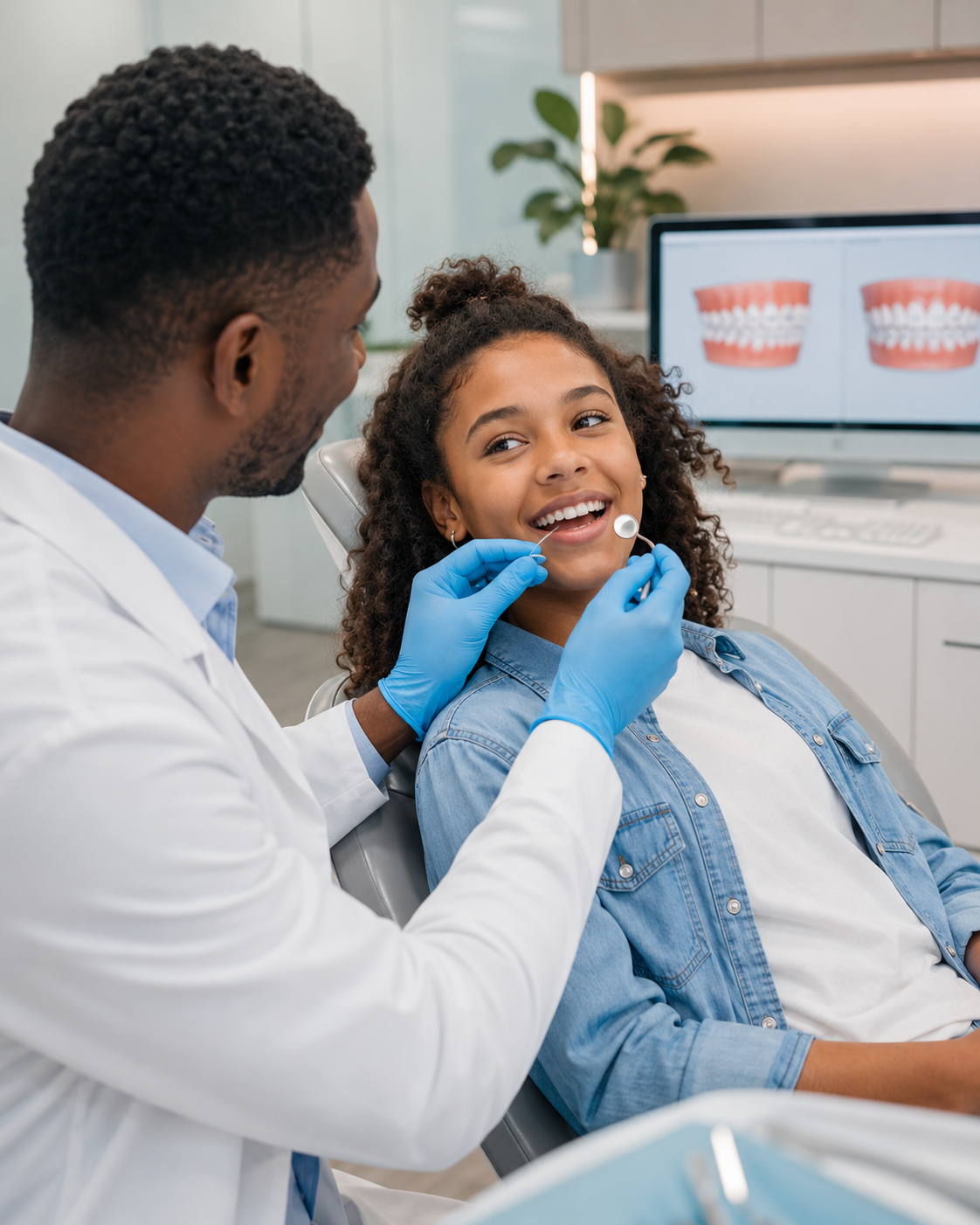
Professional fluoride options for children
Fluoride varnish is a commonly used professional treatment for children. The dentist applies a small amount of concentrated fluoride preparation directly to the teeth, where it temporarily adheres to the surface. Other professionally applied topical fluoride formulations may be considered for selected patients according to age, suitability and clinical protocols.
Our team will explain the specific product used, why it is appropriate for your child and whether additional preventive options—such as fissure sealants, dietary advice or improved home cleaning—would be helpful.
What happens during your child’s fluoride appointment?
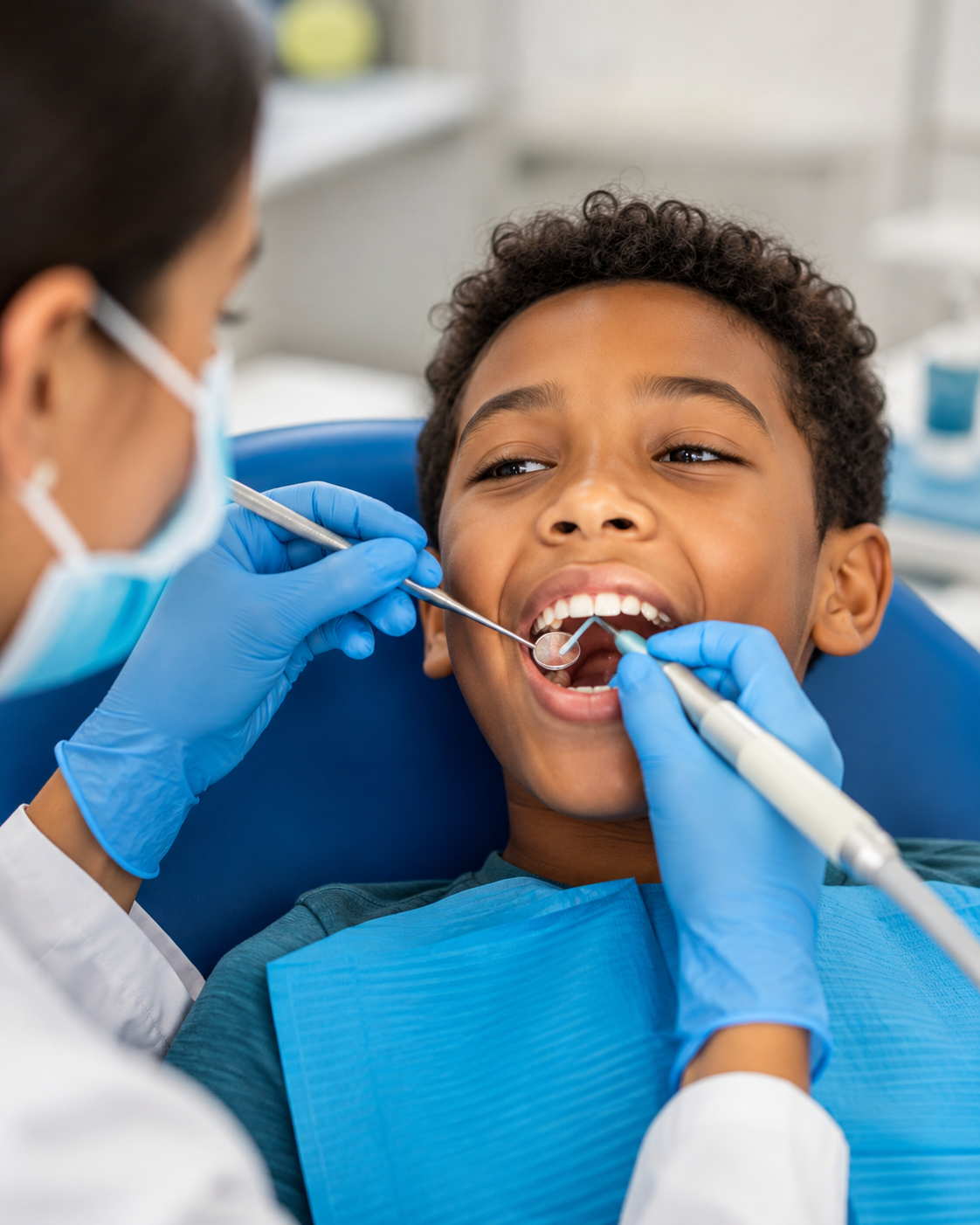
A professional fluoride visit can be simple and child-friendly. The exact steps depend on your child's examination and the fluoride product selected.
- Review and dental assessmentOur paediatric dentist examines the teeth, considers decay risk and checks whether fluoride application is appropriate.
- Explain the procedureWe tell your child what to expect in reassuring, age-appropriate language and answer the parent's questions.
- Prepare the tooth surfacesThe team may gently clean or dry the teeth as needed for the product being used.
- Apply fluorideA small amount of fluoride varnish is carefully painted onto the relevant tooth surfaces when indicated.
- Provide product-specific aftercare adviceWe explain the instructions for eating, drinking and brushing after this particular fluoride application.
- Plan the next preventive reviewYour child's follow-up interval is selected according to cavity risk and the broader oral-health plan.
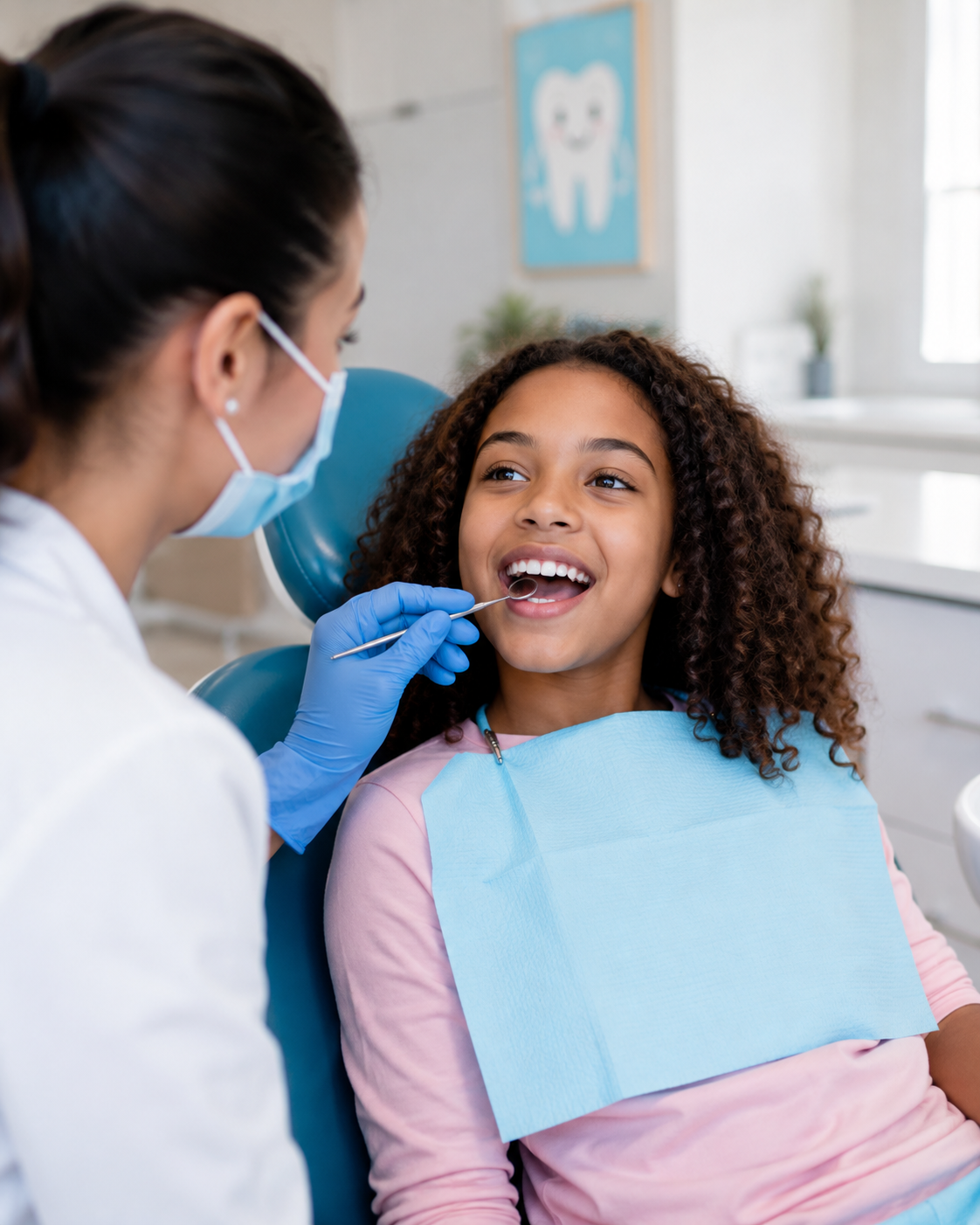
After fluoride treatment and everyday care at home
Instructions after a professional fluoride application depend on the formulation. Follow the advice provided by the treating dentist rather than a generic timetable. The varnish may leave a temporary coating or change the appearance of teeth briefly; this usually clears with routine cleaning.
Ask when your child may eat, drink and brush after the specific fluoride product used.
Use fluoride toothpaste in an age-appropriate quantity and supervise younger children to limit swallowing.
Reduce frequent sugary snacks and drinks, particularly between meals, to limit repeated acid attacks.
Dental reviews allow early detection of decay, monitoring of enamel and updates to preventive care.
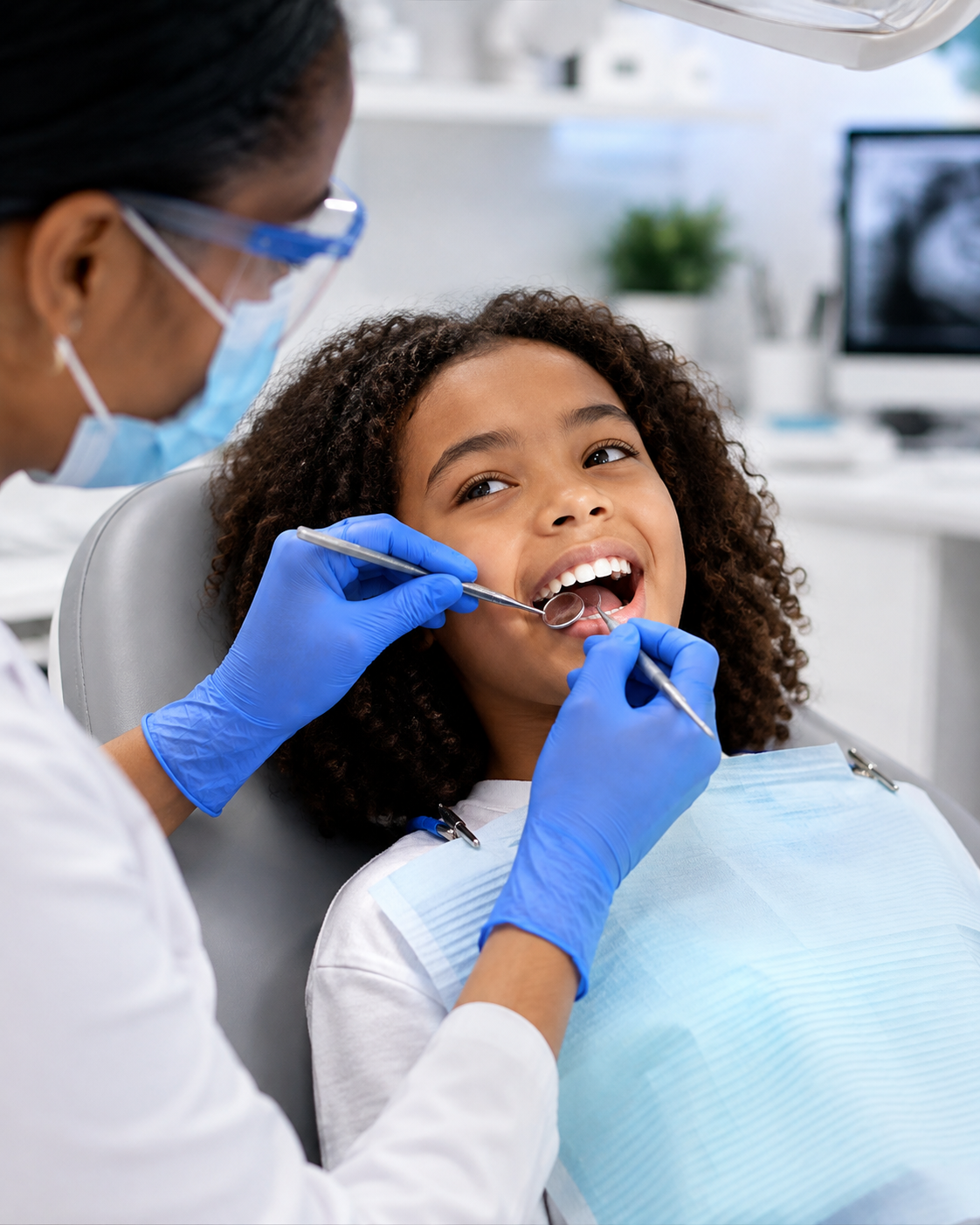
Why choose IAMC for your child’s fluoride care?
At IAMC, preventive dentistry for children is delivered with a gentle approach, individual assessment and clear advice for parents. Our paediatric dentist helps families understand when professional fluoride treatment can support a healthier growing smile.
Dedicated Paediatric Dentist
Your child’s fluoride needs are assessed by a dentist focused on children’s developing teeth, oral health and age-appropriate prevention.
Gentle, Child-Friendly Visits
We use reassuring explanations, a calm approach and a child-friendly pace to make preventive dental appointments more comfortable.
A Personalised Prevention Plan
Fluoride recommendations reflect your child’s cavity risk, age, enamel development, diet, home care and wider oral-health needs.
Evidence-Informed Fluoride Care
We discuss professional fluoride varnish when appropriate and explain how it complements daily brushing with fluoride toothpaste.
Practical Guidance for Parents
Families receive clear advice on brushing, toothpaste amounts, snacking habits and dental reviews to support healthy routines at home.
Ongoing Growth and Smile Monitoring
Regular reviews allow our paediatric dentist to monitor developing teeth and recommend further preventive care as needs change.
Frequently asked questions
Is fluoride varnish safe for children?
Professional fluoride varnish is widely used in paediatric dentistry when applied in the correct amount and according to clinical guidance. Your dentist will consider age, medical history and relevant individual factors before recommending treatment.
Does fluoride treatment hurt?
Fluoride varnish application is usually quick and does not normally require drilling or injections. Your child may notice a temporary coating or taste.
How often does my child need fluoride varnish?
The recommended frequency varies with your child’s cavity risk and dental findings. Our paediatric dentist will advise on an appropriate recall and prevention schedule.
Can fluoride treatment replace brushing?
No. Fluoride varnish provides extra protection but does not replace twice-daily brushing, suitable fluoride toothpaste, dietary care or dental examinations.
Does my child still need fluoride if there are no cavities?
Possibly, depending on their individual risk. Some children need routine home-care guidance alone; others may benefit from professional fluoride even before any cavity has developed.
Can fluoride reverse a cavity?
Fluoride may help remineralise very early enamel damage, but it cannot replace lost tooth structure once a cavity has formed. Your dentist will assess whether a filling or another treatment is needed.
What if my child has braces?
Braces can make cleaning more difficult and increase the chance of enamel white spots. Your dentist may recommend additional fluoride and specific hygiene measures where appropriate.
When can my child eat or brush afterward?
Advice depends on the fluoride formulation used. The clinical team will give you instructions specific to that product and your child’s treatment.
Give your child a stronger start.
Arrange a dental assessment and learn whether professional fluoride care is appropriate for your child's smile.