
Wisdom Tooth Removal
Not every wisdom tooth needs removal. At IAMC, we assess pain, recurrent gum inflammation, impacted third molars and neighbouring teeth, then discuss whether monitoring or treatment is right for you. Explore the procedure, recovery, and the personalised care available at our dental centre.
Understanding wisdom teeth and third molars
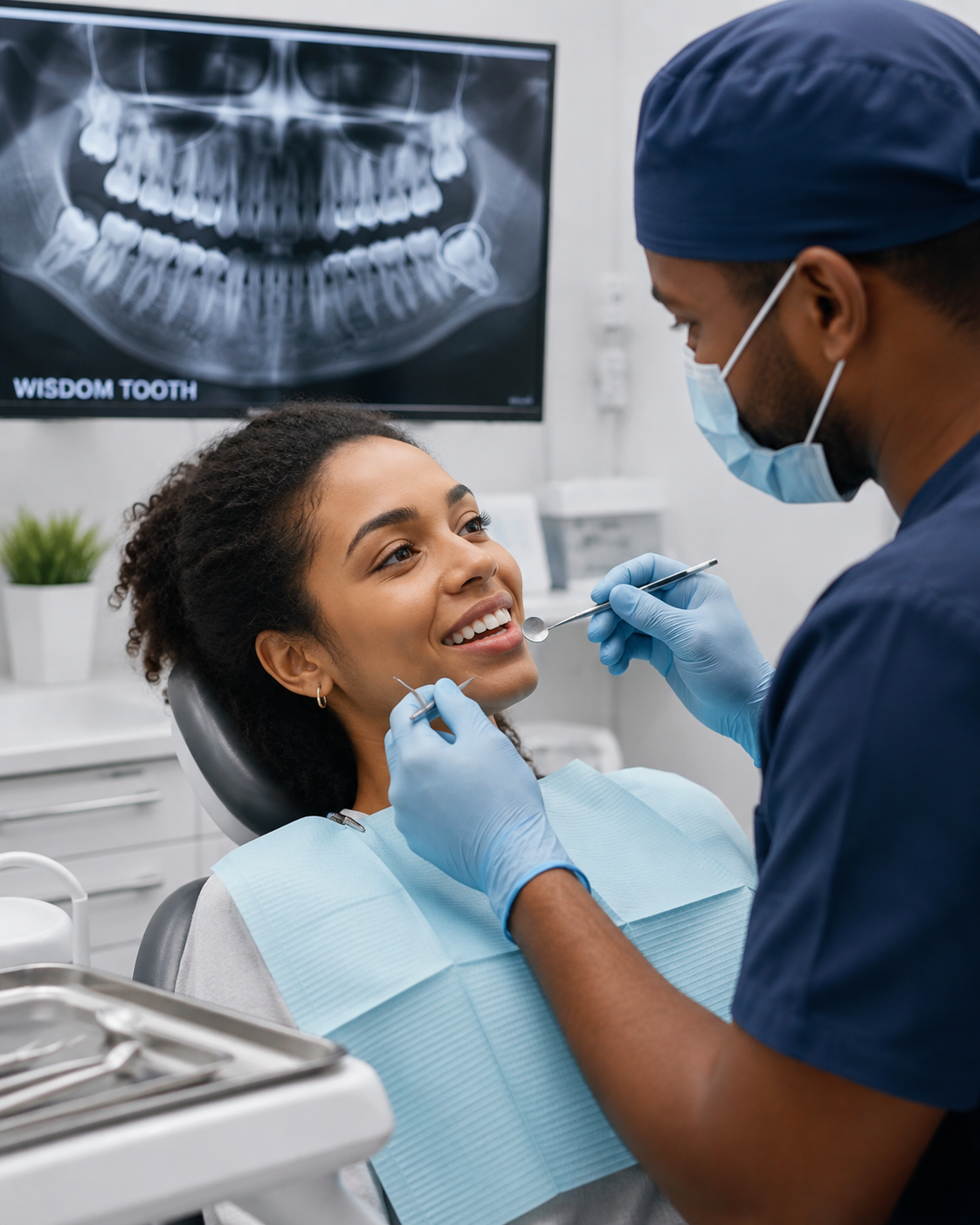
Wisdom teeth are the third molars at the back of the upper and lower jaws. They often develop in late adolescence or early adulthood, although their timing and position vary. Some erupt normally, some emerge only partly, and others remain below the gum or within the jawbone.
Having a wisdom tooth does not mean it must be removed. A fully erupted tooth that is healthy, functional and easy to clean may be monitored during routine check-ups. For impacted teeth that are free from disease, routine removal is not always appropriate. The clinical examination, imaging findings and your circumstances guide the decision.
When may wisdom tooth removal be recommended?
A recommendation for removal follows an assessment of symptoms, findings and alternatives. Common reasons include a recurrent or severe problem that cannot be addressed predictably with simpler care.
Symptoms that deserve a wisdom tooth assessment
Wisdom-tooth pain can overlap with gum disease, cavities, jaw-joint problems or pain from nearby teeth. An examination establishes the likely cause before any treatment decision.
- Pain, tenderness or pressure at the back of the jaw.
- Swelling or soreness of the gum around the last molar, sometimes with a flap covering part of the tooth.
- Unpleasant taste, bad breath or food repeatedly trapping behind the second molar.
- Difficulty opening your mouth comfortably, or discomfort while chewing.
- Repeated episodes of inflammation despite improved cleaning and professional advice.
- A concerning finding on a dental radiograph, even if no pain is present.
How the tooth position affects treatment
The angle, depth and proximity of nearby structures influence whether removal is simple or surgically involved. Your dentist will explain the specific findings from examination and imaging.
Your consultation: diagnosis and surgical planning
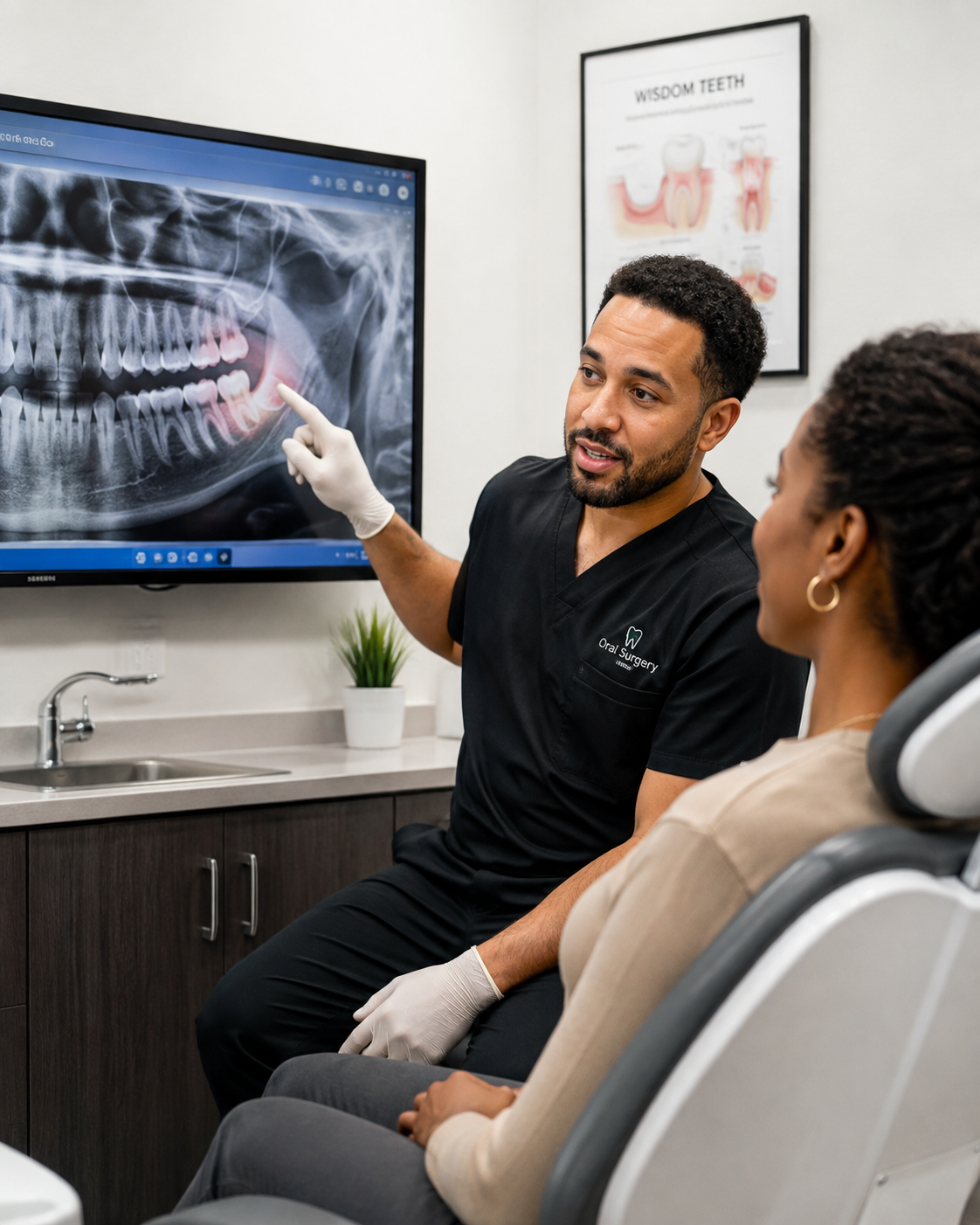
At IAMC, assessment comes first. We listen to your symptoms, check the gums and teeth at the back of the mouth, and review how the wisdom tooth sits in the jaw. We also consider your medical history, medicine use, comfort needs and the possibility of monitoring or treating the problem without extraction.
- Clinical examination: Review the wisdom tooth, neighbouring second molar, soft tissues, decay, gum condition and mouth opening.
- Dental imaging: A panoramic radiograph or another appropriate X-ray can help show position and root anatomy. A CBCT (three-dimensional scan) may be indicated for selected complex cases, not automatically for everyone.
- Nearby nerves and sinus: Lower wisdom teeth can be close to nerves supplying feeling to the lip, chin and tongue; upper wisdom teeth may lie near the maxillary sinus. These relationships are assessed before planning.
- Medical and medicine review: Tell us about pregnancy, relevant conditions, allergies, anticoagulants, bone-affecting medicines, tobacco use and prior surgical issues. Never stop a prescription medicine without professional advice.
- Your choices: We discuss observation, local care, tooth removal or appropriate referral when case complexity calls for it.
Simple removal, surgical extraction and selected alternatives
Not all third molars need the same procedure. The approach depends on how much of the tooth is visible, its root shape, bone coverage and the proposed treatment goal.
What happens during wisdom tooth removal?
For an indicated extraction, the sequence depends on the complexity of the tooth and your personalised treatment plan. The outline below describes the usual stages.
- Confirm the planThe clinician reviews the tooth, relevant records, consent, medical considerations and the planned procedure.
- Numb the treatment areaLocal anaesthetic is used for many wisdom-tooth removals. Other anxiety-control or sedation arrangements are discussed if clinically appropriate and available.
- Access the tooth safelyAn erupted tooth may be accessible without an incision. An impacted tooth may require careful opening of the gum.
- Release the toothSuitable instruments are used to mobilise it. In surgical cases the tooth may be sectioned, and limited surrounding bone may be removed when necessary.
- Inspect and clean the areaThe clinician checks the socket and addresses debris or tissue concerns according to the findings.
- Support initial healingGauze pressure helps control bleeding, and stitches may be placed if indicated. The type of stitch and review plan are explained.
- Provide recovery instructionsBefore leaving, you receive guidance on food, medicines, hygiene, activity, bleeding control and warning signs.
Pressure or movement during treatment can be normal after local anaesthesia, but significant pain should be reported so the team can reassess the anaesthetic and treatment plan.
Wisdom tooth removal recovery and aftercare
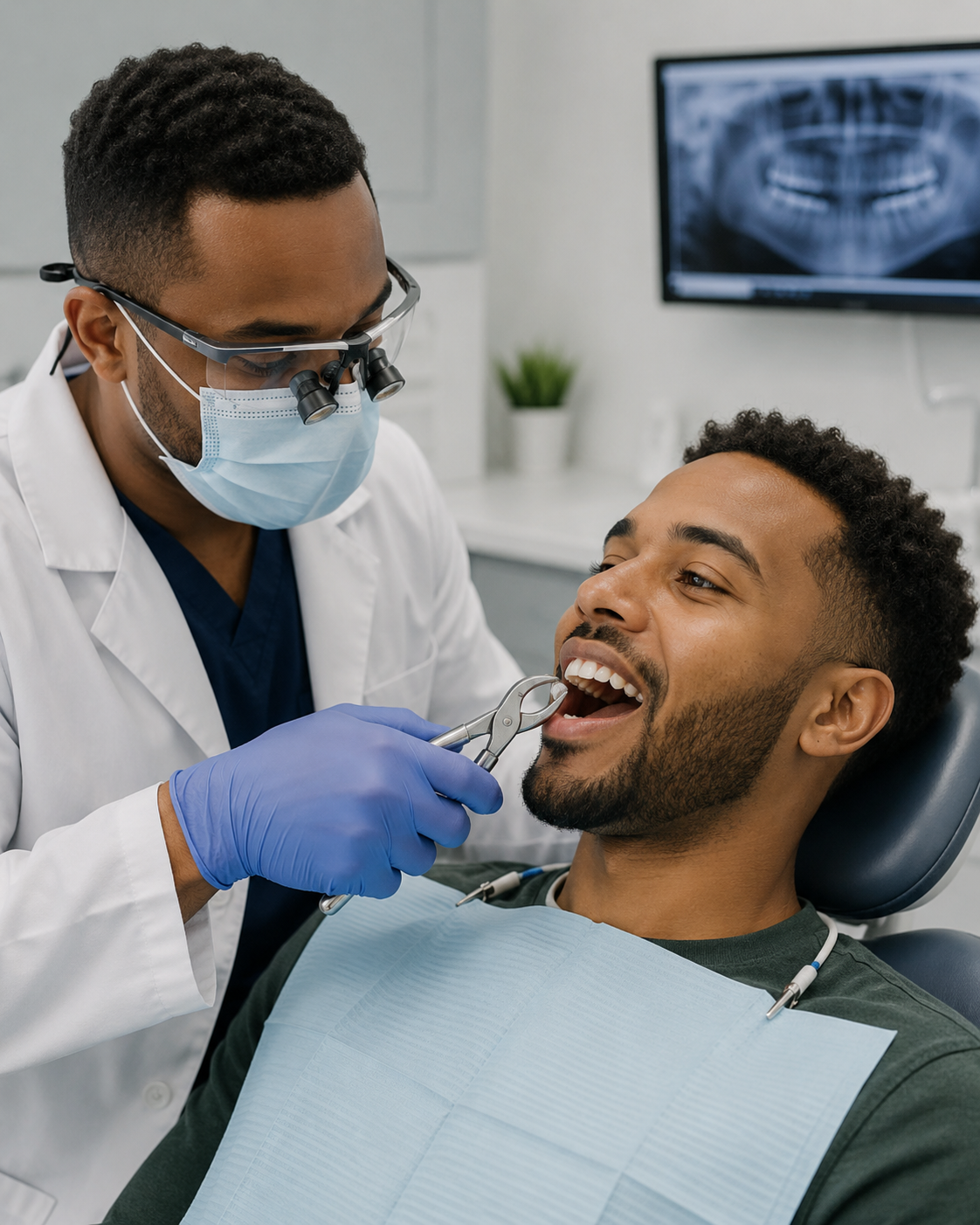
Protecting the clot in the extraction socket during the first day helps normal healing. Recovery depends on whether the tooth was straightforward to remove or required surgery, along with your general health and other individual factors. Follow the instructions from your treating clinician, even if they differ from general information online.
Protect the socket
Bite on gauze as directed. Avoid vigorous rinsing, spitting, smoking or vaping. Rest and choose suitable soft foods once numbness has subsided.
Gentle hygiene
Clean other teeth carefully. Gentle warm salt-water rinses may be advised after the first day. Avoid directly disturbing the socket.
Swelling should settle
Temporary swelling, tenderness, limited mouth opening or bruising may occur. Follow the personalised advice and attend reviews if arranged.
- Take prescribed or recommended medication as directed and check with the team if you have allergies or a medical condition affecting pain relief.
- Avoid hard or sharp foods that may irritate the area initially. Drink enough fluids and follow your clinician’s dietary guidance.
- Do not poke the socket or use straws or forceful suction if your clinician advises avoiding them during early healing.
- Do not smoke or vape during healing; these habits can increase the chance of healing problems, including dry socket.
- Seek help if bleeding is heavy or persists despite the pressure method you were given, or if you experience fever, worsening swelling or severe pain.
What if your wisdom teeth do not need removal?
Many wisdom teeth can remain if they are healthy and not causing disease. Monitoring focuses on the gums, chewing surfaces, neighbouring second molars and changes in position or symptoms. The frequency and type of follow-up are tailored rather than fixed for every patient.
Why choose IAMC for wisdom tooth removal?
At IAMC, we believe a well-planned oral surgery visit begins with careful diagnosis and honest guidance. We combine clinical assessment, imaging where indicated, patient-focused care and practical recovery support to help you make an informed decision.
Careful, evidence-informed assessment
We assess why a wisdom tooth is causing trouble and whether monitoring, local treatment or removal is the appropriate recommendation.
Experienced dental clinicians
IAMC’s dental team plans oral surgical care around the tooth, supporting tissues, your health history and the complexity of the case.
Digital imaging and planning
Dental radiographs and advanced three-dimensional imaging, when indicated, help us understand tooth position, root anatomy and nearby structures.
Comfort-focused treatment
We explain each stage, discuss anaesthesia and anxiety-related needs, and keep communication clear throughout the appointment.
Thoughtful surgical technique
The proposed approach is selected with care for surrounding gums, bone, neighbouring molars and the structures near the roots.
Clear aftercare and follow-up
We provide practical recovery instructions and explain when to contact the clinic if your healing does not follow the expected course.
Frequently asked questions
Does every wisdom tooth need to be removed?
No. A wisdom tooth that is healthy and not causing disease may be monitored. The decision is based on symptoms, examination, imaging and the potential benefits and harms of treatment.
What is an impacted wisdom tooth?
An impacted third molar has not erupted into a normal functional position, sometimes because of limited room or its direction of growth. Impaction does not automatically mean removal is necessary.
Can wisdom teeth cause crowding of front teeth?
The relationship between third molars and front-tooth crowding is not a reliable reason on its own for routine removal. Any orthodontic concerns should be assessed separately.
Is wisdom tooth surgery painful?
Local anaesthesia usually numbs the site during removal. You may still feel pressure or movement. Tell the clinician if you experience significant pain.
Do I need a panoramic X-ray or CBCT?
Imaging is chosen according to the clinical question. Panoramic or other dental X-rays are often useful; CBCT is reserved for selected cases where additional information is justified.
What is the difference between simple extraction and surgical removal?
An accessible erupted tooth may be loosened and removed directly. An impacted or difficult tooth may require an incision, limited bone removal, or separation of the tooth into parts.
Will I need stitches?
Some surgical extractions need stitches while others do not. Your clinician will explain whether sutures are planned and any follow-up needed.
What is dry socket?
Dry socket is a painful healing problem that can occur if the clot in the socket does not form or breaks down too early. Increasing pain a few days after surgery deserves review.
How long does recovery take?
Temporary soreness and swelling often improve over several days, but exact recovery depends on the complexity of surgery and individual healing. Full tissue healing takes longer.
Can I eat after removal?
Follow the specific instructions given after your procedure. In general, avoid chewing while numb and start with suitable soft foods; avoid foods that irritate the site.
Are there nerves near lower wisdom teeth?
Yes. Some lower third molars lie close to nerves that supply sensation to the lip, chin or tongue. Your clinician assesses this relationship and explains relevant precautions.
Can upper wisdom teeth affect the sinus?
Upper wisdom tooth roots may be close to the maxillary sinus. The clinician considers that anatomy before removal and gives additional instructions when indicated.
When should I call the clinic urgently?
Contact the treating team for heavy or persistent bleeding, increasing swelling, fever, significant persistent numbness or worsening pain. Difficulty breathing or swallowing requires emergency medical care.
What if I take blood-thinning medicines?
Tell the dentist about all prescribed medicines. Do not stop anticoagulants or antiplatelet treatment on your own; any changes require appropriate professional coordination.

Concerned about a wisdom tooth?
We can assess your symptoms, explain treatment choices and guide you through appropriate removal and recovery if surgery is needed.